Citizenship Mock Interview
Hear the questions a USCIS officer asks about your N-400, answer out loud, then compare with a sample answer.
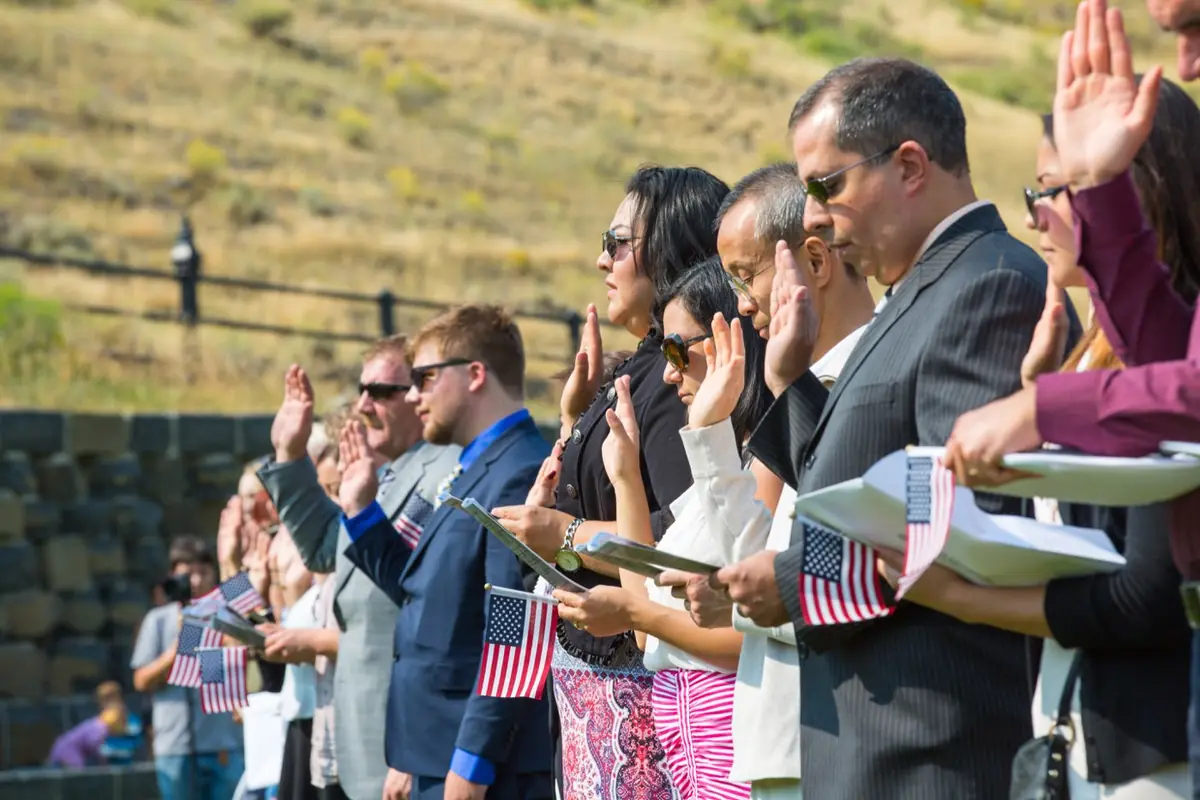
Please raise your right hand. Do you swear to tell the truth and nothing but the truth?
Tip: if you do not understand a question in the real interview, say "Could you please repeat that?" or "Could you say it another way?". Officers expect this.
What happens at the interview
Oath and identity check
You are placed under oath. The officer checks your Green Card, ID and passports.
N-400 review
The officer goes through your application: addresses, work, travel, family, and the "have you ever" questions.
English and civics tests
You read one sentence, write one sentence, and answer the civics questions out loud.
All practice questions
Please raise your right hand. Do you swear to tell the truth and nothing but the truth?
Sample answer: Yes, I do.
The officer places you under oath before the interview starts.
What is your full name?
Sample answer: My full name is [first name, middle name, last name].
Use the same name as on your N-400.
Have you used any other names?
Sample answer: Yes, my maiden name was [name]. / No, I have not.
Include maiden names and name changes.
What is your date of birth?
Sample answer: I was born on [month, day, year].
Where do you live now?
Sample answer: I live at [street, city, state, ZIP code].
How long have you lived at this address?
Sample answer: I have lived there since [month, year].
Are you married?
Sample answer: Yes, I am married. / No, I am single.
If you are married, the officer may ask when and where you married, and about your spouse's citizenship.
Do you have children?
Sample answer: Yes, I have [number] children. / No, I do not.
Where do you work?
Sample answer: I work at [employer] as a [job title].
If you are retired, unemployed or a student, say so.
How long have you been a permanent resident?
Sample answer: I have been a permanent resident since [date on your Green Card].
Since becoming a permanent resident, have you traveled outside the United States?
Sample answer: Yes, I went to [country] from [date] to [date]. / No, I have not.
Trips longer than six months need extra explanation.
Have you ever claimed to be a U.S. citizen?
Sample answer: No, I have not.
Answer honestly. Ask the officer to repeat if you do not understand a "have you ever" question.
Have you ever registered or voted in a federal, state, or local election in the United States?
Sample answer: No, I have not.
Do you owe any overdue federal, state, or local taxes?
Sample answer: No, I do not.
Have you ever been arrested, cited, or detained by any law enforcement officer?
Sample answer: No, I have not.
Traffic tickets over $500 and any arrest must be disclosed, with documents.
Do you support the Constitution and form of government of the United States?
Sample answer: Yes, I do.
Are you willing to take the full Oath of Allegiance to the United States?
Sample answer: Yes, I am.
If the law requires it, are you willing to bear arms on behalf of the United States?
Sample answer: Yes, I am.
Some applicants qualify for a modified oath for religious reasons.
What does "Oath of Allegiance" mean?
Sample answer: It is a promise to be loyal to the United States.
Officers often check that you understand key words from the N-400.
What does "bear arms" mean?
Sample answer: To carry weapons and fight for the United States.
Why do you want to become a U.S. citizen?
Sample answer: I want to vote and fully take part in my community.
Give a short, sincere answer in your own words.
Common questions
How long does the citizenship interview take?
Most interviews take about 20 to 30 minutes. The officer places you under oath, checks your identity documents, reviews your N-400 answers, and gives the English and civics tests.
What questions does the officer ask about my N-400?
Expect questions about your name, addresses, jobs and schools, trips outside the United States, marriage and children, and the "have you ever" questions about arrests, taxes and voting. The officer also confirms you are willing to take the Oath of Allegiance.
What if I do not understand a question?
Ask the officer to repeat it or say it another way. That is normal and allowed. Understanding and answering simple questions about your application is part of the speaking test, so practice listening to the questions out loud.
Can I bring an interpreter or a lawyer?
You may bring an attorney or accredited representative. An interpreter is only allowed if you qualify for an exception to the English requirement (50/20, 55/15, 65/20 or a Form N-648 disability exception).
What happens at the end of the interview?
The officer gives you Form N-652 with the result: granted (recommended for approval), continued (for example to retest or send more documents), or denied. If you are approved, you will be scheduled for the Oath ceremony, sometimes the same day.