American History Questions for the Citizenship Test: The Story in Order
Learn the history section of the civics test as one simple story, from the first colonies to September 11, with every official question and answer.
On this page
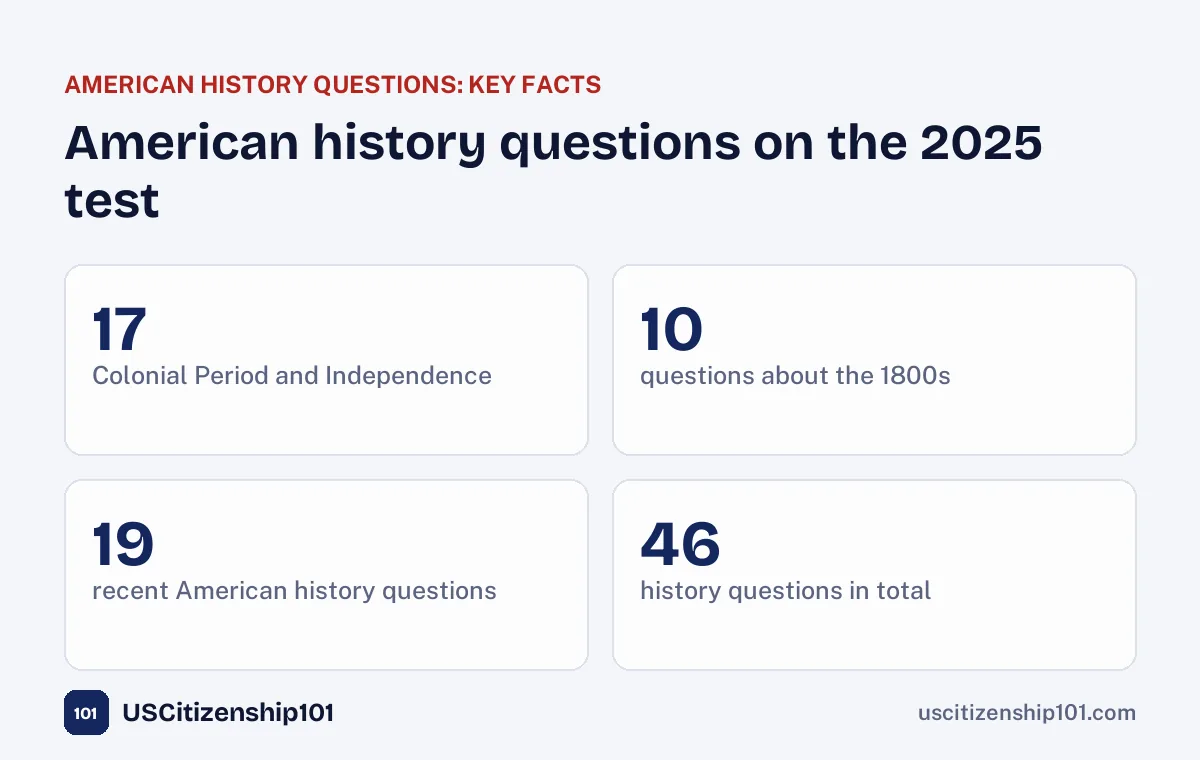
The American history questions on the U.S. citizenship test cover about 400 years of events, from the first colonies to the attacks of September 11, 2001. On the 2025 civics test there are 46 American history questions, more than a third of the whole list. That sounds like a lot, but these questions follow one continuous story. When you learn the story in order, the answers connect and become much easier to remember.
This guide tells that story in plain English, period by period, and then lists every official American history question with its accepted answers. Use the story first to understand, then use the list to practice.
Key points about the American history questions
- The 2025 test has 46 American history questions in three parts.
- Colonial Period and Independence: 17 questions. 1800s: 10. Recent history: 19.
- The 2008 test has 30 history questions on the same themes.
- Learning the events in order is the fastest way to remember them.
- Every answer below comes from the official USCIS list.
Part 1: The colonies (1600s to 1770s)
Before Europeans arrived, American Indians lived throughout the land that became the United States. Many American history questions ask about them, and you can name tribes such as the Cherokee, Navajo, Sioux, Apache, and Iroquois as answers.
Starting in the early 1600s, people came from Europe to America for freedom, political liberty, religious freedom, economic opportunity, and to escape persecution. They founded 13 colonies along the Atlantic coast. People were also taken from Africa and sold as slaves in the colonies, a painful part of the story that the test asks about directly.
The 13 original colonies were New Hampshire, Massachusetts, Rhode Island, Connecticut, New York, New Jersey, Pennsylvania, Delaware, Maryland, Virginia, North Carolina, South Carolina, and Georgia. You only need to name three if asked.
Part 2: Independence (1770s to 1780s)
The colonists grew angry because Britain taxed them without giving them a voice in government (“taxation without representation”), kept British soldiers in their houses, and did not let them govern themselves. Protests such as the Boston Tea Party grew into war.
On July 4, 1776, the colonies adopted the Declaration of Independence, written mainly by Thomas Jefferson. It said the colonies were free from Britain and that all people are created equal, with rights such as life, liberty, and the pursuit of happiness. The colonists fought the American Revolution (the Revolutionary War) and won their independence. George Washington led the army and later became the first President, which is why he is called the “Father of Our Country.”
Part 3: The Constitution (1787)
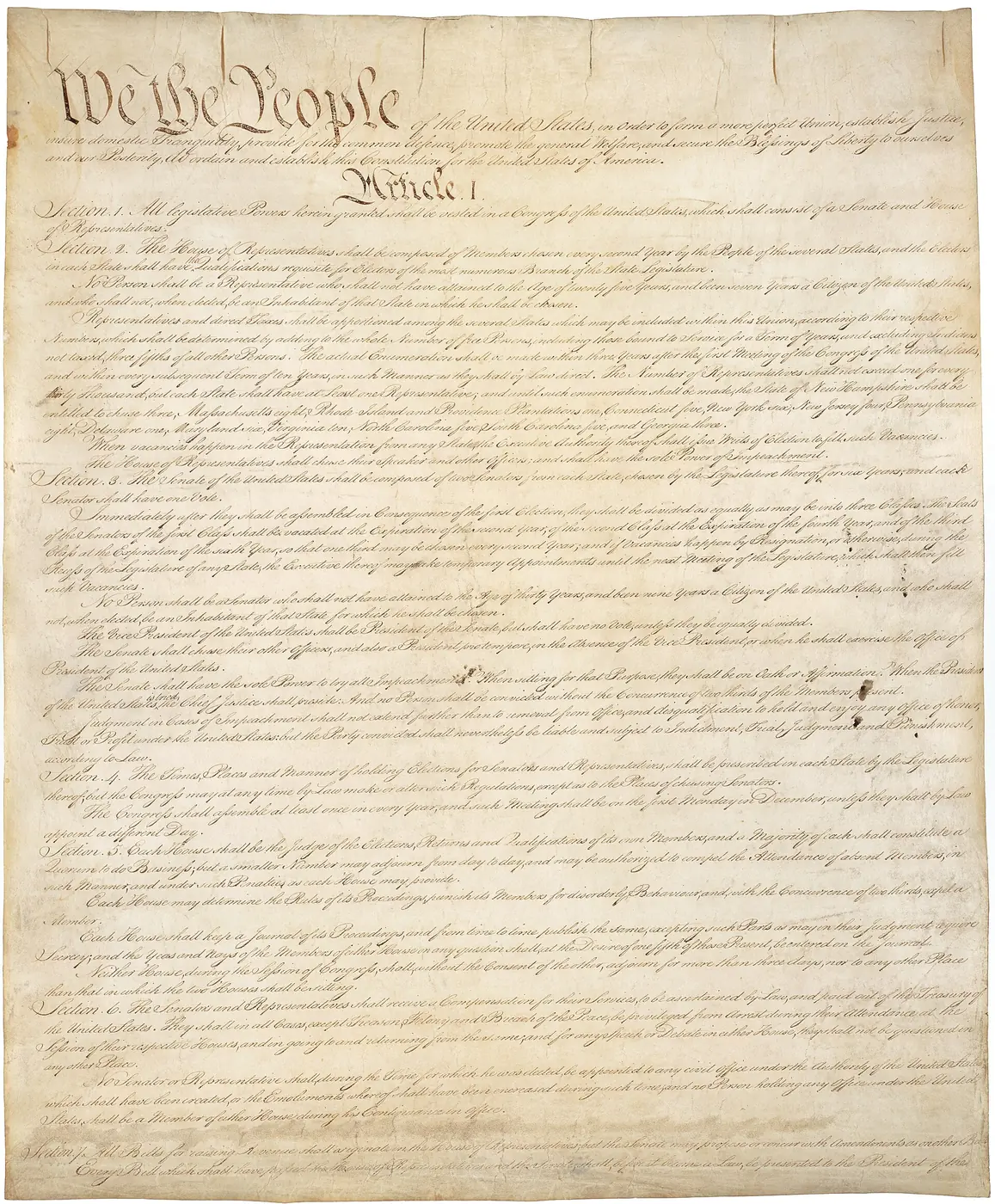
The first national government under the Articles of Confederation was too weak. In 1787, leaders met at the Constitutional Convention in Philadelphia and wrote the Constitution. James Madison, often called the “Father of the Constitution,” played a central role. To convince the states to approve it, Madison, Alexander Hamilton, and John Jay wrote essays called the Federalist Papers. Benjamin Franklin, the oldest delegate, is another founder the American history questions ask about.
Part 4: The 1800s
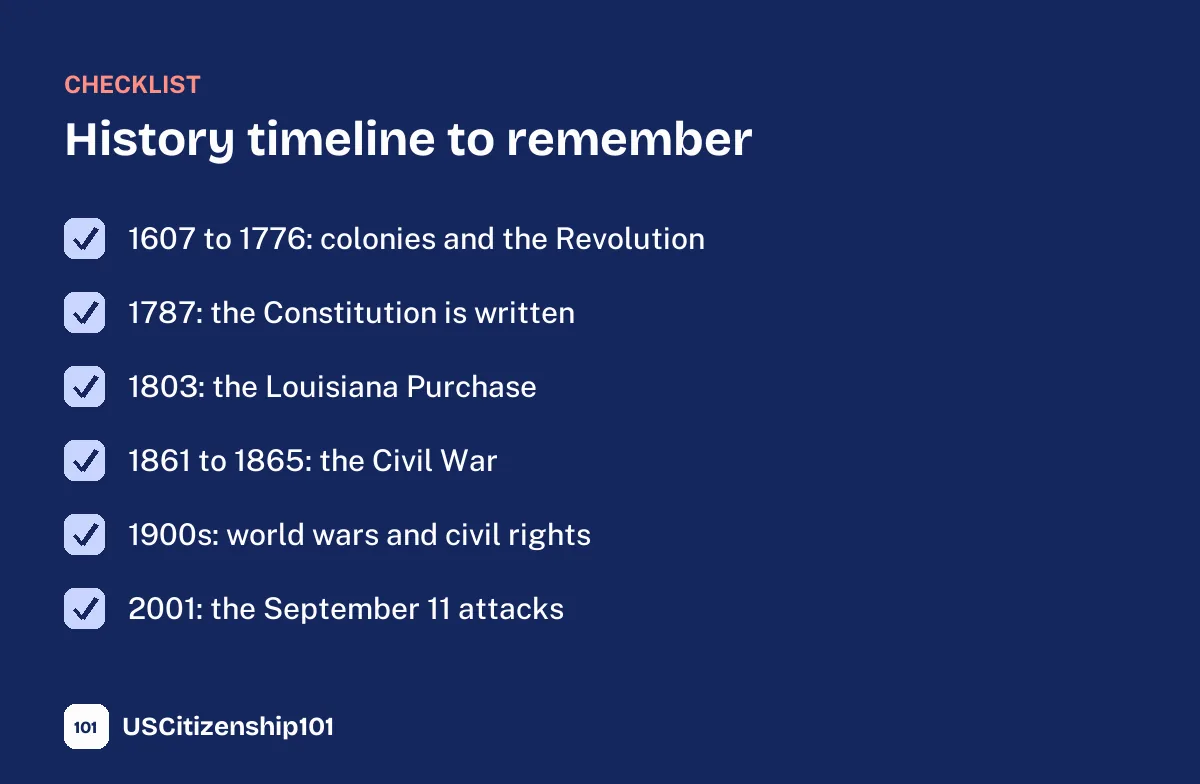
In 1803, the United States bought the Louisiana Territory from France, doubling the size of the country. Through the 1800s the nation fought several wars, including the War of 1812, the Mexican-American War, the Civil War, and the Spanish-American War.
The biggest crisis was the Civil War (1861 to 1865), fought between the North and the South. Its causes included slavery, economic reasons, and states’ rights. President Abraham Lincoln led the country, preserved the Union, and signed the Emancipation Proclamation, which freed slaves in the Confederate states. After the war, the 13th Amendment ended slavery. Susan B. Anthony fought for women’s rights and civil rights in the same era.
Part 5: The 1900s and recent history
In the 1900s the United States fought in World War I, World War II, the Korean War, the Vietnam War, and the Persian Gulf War. Woodrow Wilson was President during World War I. Franklin Roosevelt was President during the Great Depression and most of World War II. Dwight Eisenhower was a general in World War II and later President.
During the Cold War, the main concern of the United States was communism. At home, the civil rights movement worked to end racial discrimination. Martin Luther King, Jr. fought for civil rights and equality for all Americans. On September 11, 2001, terrorists attacked the United States.
Many of these American history questions on the 2025 test ask about specific people and events in more detail than the 2008 test did, so read the official list below carefully.
All official American history questions (2025 test)
Here are all 46 American history questions from the 2025 list, with accepted answers from USCIS. Where a question has several answers, one is enough unless the question asks for more.
Colonial Period and Independence
- The colonists came to America for many reasons. Name one. Freedom; Political liberty; and other answers
- Who lived in America before the Europeans arrived? American Indians; Native Americans
- What group of people was taken and sold as slaves? Africans; People from Africa
- What war did the Americans fight to win independence from Britain? American Revolution; The (American) Revolutionary War; and other answers
- Name one reason why the Americans declared independence from Britain. High taxes; Taxation without representation; and other answers
- Who wrote the Declaration of Independence? (Thomas) Jefferson
- When was the Declaration of Independence adopted? July 4, 1776
- The American Revolution had many important events. Name one. (Battle of) Bunker Hill; Declaration of Independence; and other answers
- There were 13 original states. Name five. New Hampshire; Massachusetts; and other answers
- What founding document was written in 1787? (U.S.) Constitution
- The Federalist Papers supported the passage of the U.S. Constitution. Name one of the writers. (James) Madison; (Alexander) Hamilton; and other answers
- Why were the Federalist Papers important? They helped people understand the (U.S.) Constitution.; They supported passing the (U.S.) Constitution.
- Benjamin Franklin is famous for many things. Name one. Founded the first free public libraries; First Postmaster General of the United States; and other answers
- George Washington is famous for many things. Name one. “Father of Our Country”; First president of the United States; and other answers
- Thomas Jefferson is famous for many things. Name one. Writer of the Declaration of Independence; Third president of the United States; and other answers
- James Madison is famous for many things. Name one. “Father of the Constitution”; Fourth president of the United States; and other answers
- Alexander Hamilton is famous for many things. Name one. First Secretary of the Treasury; One of the writers of the Federalist Papers; and other answers
The 1800s
- What territory did the United States buy from France in 1803? Louisiana Territory; Louisiana
- Name one war fought by the United States in the 1800s. War of 1812; Mexican-American War; and other answers
- Name the U.S. war between the North and the South. The Civil War
- The Civil War had many important events. Name one. (Battle of) Fort Sumter; Emancipation Proclamation; and other answers
- Abraham Lincoln is famous for many things. Name one. Freed the slaves (Emancipation Proclamation); Saved (or preserved) the Union; and other answers
- What did the Emancipation Proclamation do? Freed the slaves; Freed slaves in the Confederacy; and other answers
- What U.S. war ended slavery? The Civil War
- What amendment says all persons born or naturalized in the United States, and subject to the jurisdiction thereof, are U.S. citizens? 14th Amendment
- When did all men get the right to vote? After the Civil War; During Reconstruction; and other answers
- Name one leader of the women’s rights movement in the 1800s. Susan B. Anthony; Elizabeth Cady Stanton; and other answers
Recent American History and Other Important Historical Information
- Name one war fought by the United States in the 1900s. World War I; World War II; and other answers
- Why did the United States enter World War I? Because Germany attacked U.S. (civilian) ships; To support the Allied Powers (England, France, Italy, and Russia); and other answers
- When did all women get the right to vote? 1920; After World War I; and other answers
- What was the Great Depression? Longest economic recession in modern history
- When did the Great Depression start? The Great Crash (1929); Stock market crash of 1929
- Who was president during the Great Depression and World War II? (Franklin) Roosevelt
- Why did the United States enter World War II? (Bombing of) Pearl Harbor; Japanese attacked Pearl Harbor; and other answers
- Dwight Eisenhower is famous for many things. Name one. General during World War II; President at the end of (during) the Korean War; and other answers
- Who was the United States’ main rival during the Cold War? Soviet Union; USSR; and other answers
- During the Cold War, what was one main concern of the United States? Communism; Nuclear war
- Why did the United States enter the Korean War? To stop the spread of communism
- Why did the United States enter the Vietnam War? To stop the spread of communism
- What did the civil rights movement do? Fought to end racial discrimination
- Martin Luther King, Jr. is famous for many things. Name one. Fought for civil rights; Worked for equality for all Americans; and other answers
- Why did the United States enter the Persian Gulf War? To force the Iraqi military from Kuwait
- What major event happened on September 11, 2001 in the United States? Terrorists attacked the United States; Terrorists took over two planes and crashed them into the World Trade Center in New York City; and other answers
- Name one U.S. military conflict after the September 11, 2001 attacks. (Global) War on Terror; War in Afghanistan; and other answers
- Name one American Indian tribe in the United States. Apache; Blackfeet; and other answers
- Name one example of an American innovation. Light bulb; Automobile (cars, internal combustion engine); and other answers
Tricky American history questions and how to answer them
A few American history questions trip up many applicants. Here is how to handle them.
“Name one war fought by the United States in the 1800s”
Do not answer World War I or World War II, which were in the 1900s. Safe answers are the War of 1812, the Mexican-American War, the Civil War, or the Spanish-American War.
“Name one war fought by the United States in the 1900s”
Here the world wars are correct. You can also say the Korean War, the Vietnam War, or the Persian Gulf War.
Questions that ask for “three” of something
Some American history questions ask you to name three of the original states. Practice saying three in one breath, such as “New York, New Jersey, and Pennsylvania,” so you never stop at two.
Questions about why something happened
For questions that ask why the colonists fought Britain or why the Civil War happened, one clear reason is enough. Short answers like “high taxes” or “slavery” are accepted.
American history questions on the 2008 test
If you filed before October 20, 2025, you take the 2008 test, which has 30 American history questions instead of 46. They cover the same story: the colonies, the Revolution, the Constitution, the 1800s, and the 1900s. The 2008 version also asks who was President during World War I (Woodrow Wilson) and during the Great Depression and World War II (Franklin Roosevelt). Study the full list in our guide to the 100 civics questions.
Places where American history comes alive
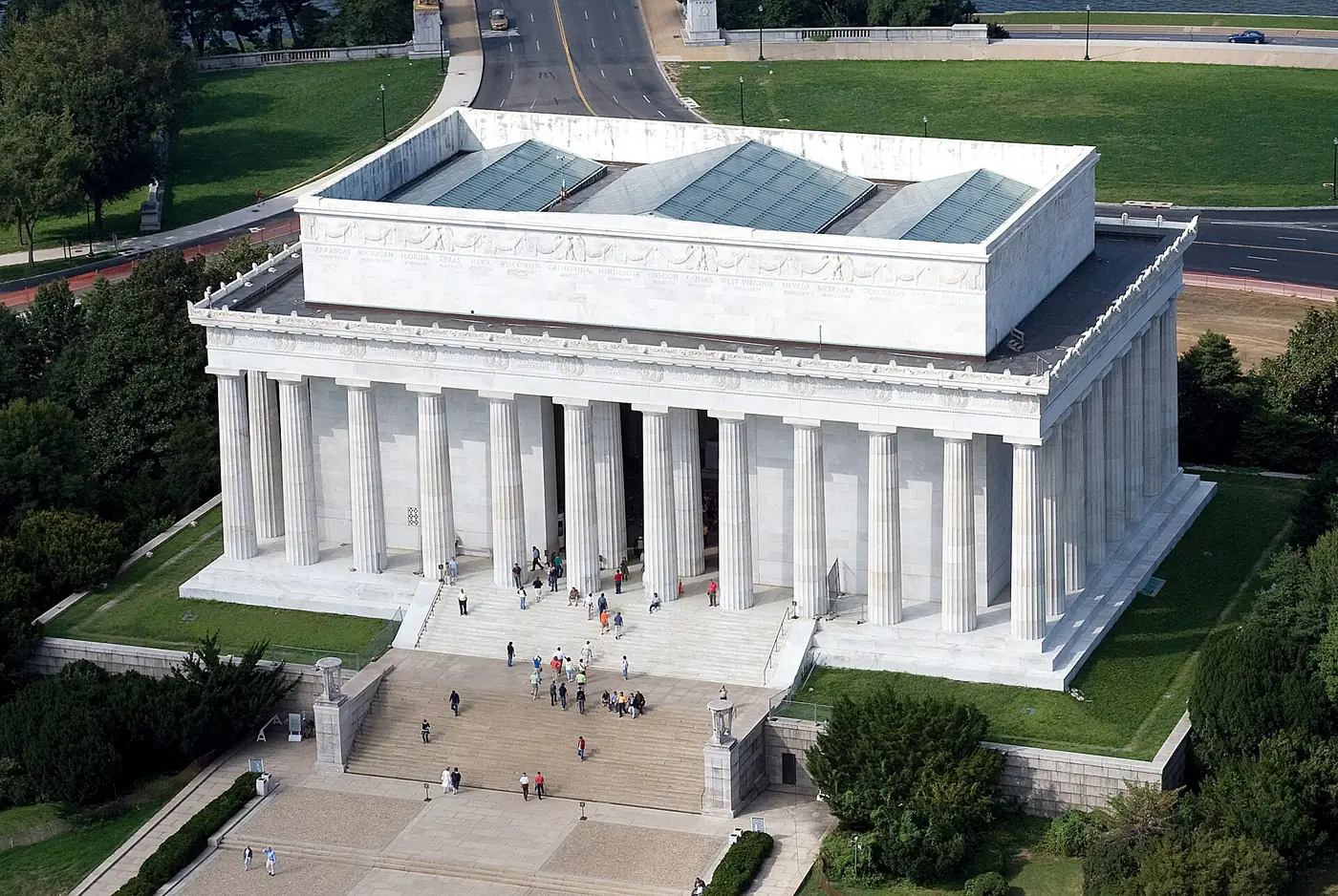
If you can visit, historic sites make the American history questions unforgettable. Independence Hall in Philadelphia is where the Declaration of Independence was adopted and the Constitution was written. The National Archives in Washington, D.C. displays the original Declaration, Constitution, and Bill of Rights. The Lincoln Memorial honors the President who led the country through the Civil War. Many national parks and museums also offer free online tours, which are a great way to review history questions from home.
A 5-day plan for the American history questions
- Day 1: The colonies and why people came to America. Learn the 13 original states.
- Day 2: The Revolution and the Declaration of Independence. Learn Jefferson, Washington, and July 4, 1776.
- Day 3: The Constitution and the founders: Madison, Hamilton, Jay, and Franklin.
- Day 4: The 1800s: the Louisiana Purchase, the Civil War, Lincoln, and the end of slavery.
- Day 5: The 1900s to today: the world wars, the Depression, the Cold War, civil rights, and September 11.
On day six, answer all 46 American history questions out loud from the official list above, and mark any you miss. Repeat the marked questions each day until your interview. This short plan works well alongside our longer civics test study plan, and it keeps the American history questions fresh while you study the rest of the test.
How to study the American history questions
- Draw a timeline. Put each event from the American history questions on one line across a sheet of paper.
- Link people to events. Washington with the Revolution, Lincoln with the Civil War, Roosevelt with the Depression and World War II, King with civil rights.
- Tell the story out loud. Explaining history in your own words, even to yourself, builds memory quickly.
- Use short daily sessions. Ten American history questions a day for five days covers the whole section.
- Test yourself. Use “Practice by topic” in our civics practice test and choose a history topic.
For the whole test, see our list of 128 civics questions, or the 100 civics questions if you filed before October 20, 2025.
Frequently asked questions
How many American history questions are on the test?
The 2025 test has 46 American history questions out of 128. The 2008 test has 30 out of 100. The officer picks questions from the whole list, so you may get several or only a few.
Do I need exact dates?
Only for a few questions, like when the Declaration of Independence was adopted (July 4, 1776) and when the Constitution was written (1787). Most American history questions ask about people and events, not dates.
Should I read a history book too?
It is not required. The official list and a simple timeline are enough to pass, though a short illustrated history can make studying more enjoyable.
What is the hardest part?
Many applicants find the list of wars and the presidents during them hardest. A timeline makes these much easier.
Can I answer American history questions in my own words?
Yes. The officer accepts answers that clearly mean the same thing as the official answer. Keeping your answer short and simple is usually best.
Are these questions also on the 2008 test?
Many are similar. The 2008 test has fewer American history questions and slightly different wording.
Final thoughts
The American history questions tell the story of how the United States became the country it is today. Learn that story in order, connect people to events, and practice the official questions out loud. What starts as 46 separate facts quickly becomes one story you can tell with confidence at your interview.
Sources: USCIS, 128 Civics Questions and Answers (2025 version) and 100 Civics Questions and Answers (2008 version); National Archives, America’s Founding Documents. Last reviewed September 2026.
Free tools
This article is for general education, not legal advice. Always confirm requirements at uscis.gov.