Good Moral Character for U.S. Citizenship: What USCIS Looks At
What USCIS considers when it decides whether you have good moral character, which issues are bars, and how to show your positive contributions.
On this page
Good moral character is a legal requirement for U.S. citizenship. It means that, during the required period before you apply and up until you take the oath, you have behaved in a way that meets the standards of your community and the law. USCIS looks at your criminal history, honesty, taxes, family support, and other conduct, and it also considers the positive things you contribute.
This guide explains how good moral character is evaluated, which issues are permanent or conditional bars, common problems such as taxes and child support, and how to present your case honestly and with the right evidence. It is general information, and anyone with a criminal record should get legal advice before filing.
Key points about good moral character
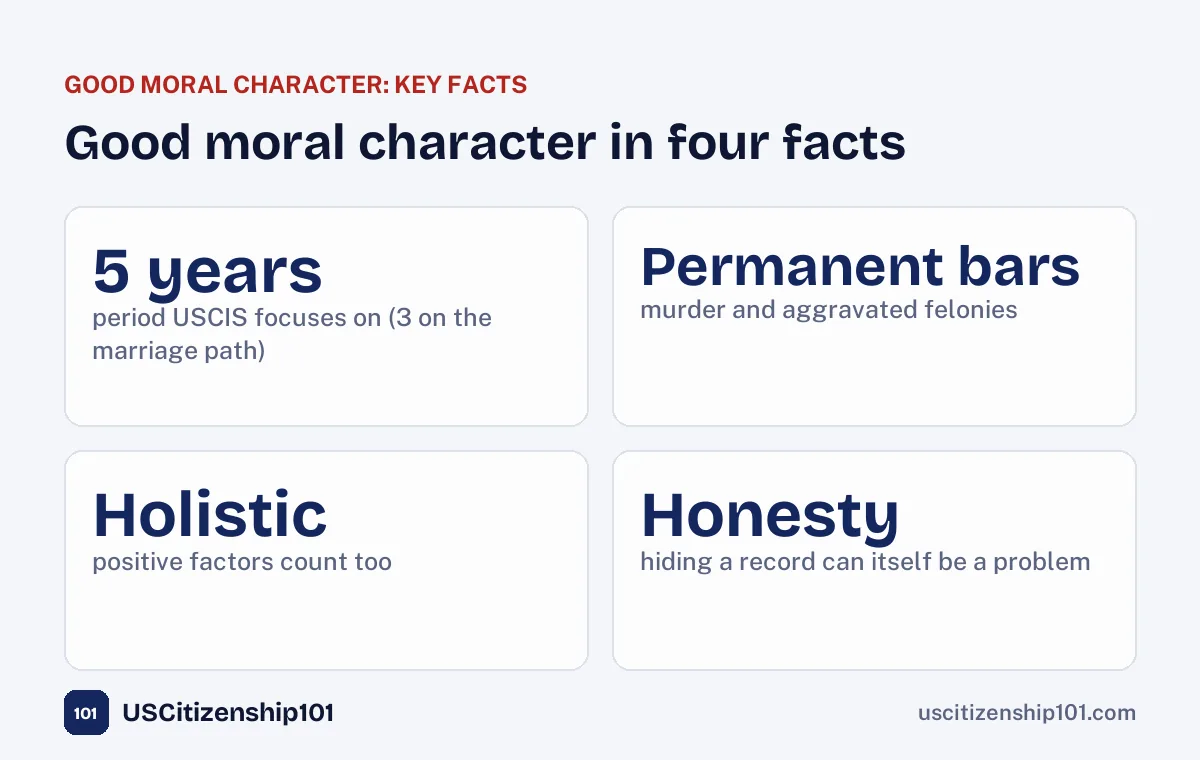
- USCIS evaluates good moral character mainly during the statutory period: 5 years before filing (3 on the marriage path), up to the oath.
- Some conduct is a permanent bar, such as a murder conviction or an aggravated felony conviction after November 29, 1990.
- Other conduct is a conditional bar if it happened during the statutory period.
- Officers take a holistic view, weighing positive factors as well as negative ones.
- Honesty matters most: lying on your application can itself show a lack of good moral character.
The statutory period
For most applicants, USCIS focuses on your conduct during the statutory period: the 5 years before you file (3 years if you apply as the spouse of a U.S. citizen), and the time from filing until your oath ceremony. Conduct before that period can still be considered if it is relevant to your character now, and some serious offenses count no matter when they happened.
Permanent bars
Certain conduct permanently prevents a finding of good moral character, regardless of when it occurred, and no amount of time or rehabilitation changes that. These include:
- A conviction for murder.
- A conviction for an aggravated felony on or after November 29, 1990. “Aggravated felony” is a legal term that includes many serious crimes and some offenses that may not sound serious.
- Participation in persecution, genocide, torture, or particularly severe violations of religious freedom.
If any of these might apply to you, speak with an immigration attorney before filing, because applying could also put your permanent residence at risk.
Conditional bars
Other conduct prevents good moral character if it happened during the statutory period. Examples include:
- Certain crimes involving moral turpitude.
- Controlled substance violations, with a limited exception for a single offense of possessing 30 grams or less of marijuana.
- Two or more offenses of any kind with combined prison sentences of five years or more.
- Confinement in jail or prison for 180 days or more.
- Being a habitual drunkard.
- Illegal gambling as a main source of income, or two or more gambling convictions.
- Prostitution or smuggling people into the country.
- Polygamy.
- Giving false testimony under oath to obtain an immigration benefit.
- Unlawfully voting or falsely claiming to be a U.S. citizen.

Other factors that can affect good moral character
Even conduct that is not a listed bar can lead to a negative finding if it reflects poorly on your character. Common examples:
Taxes
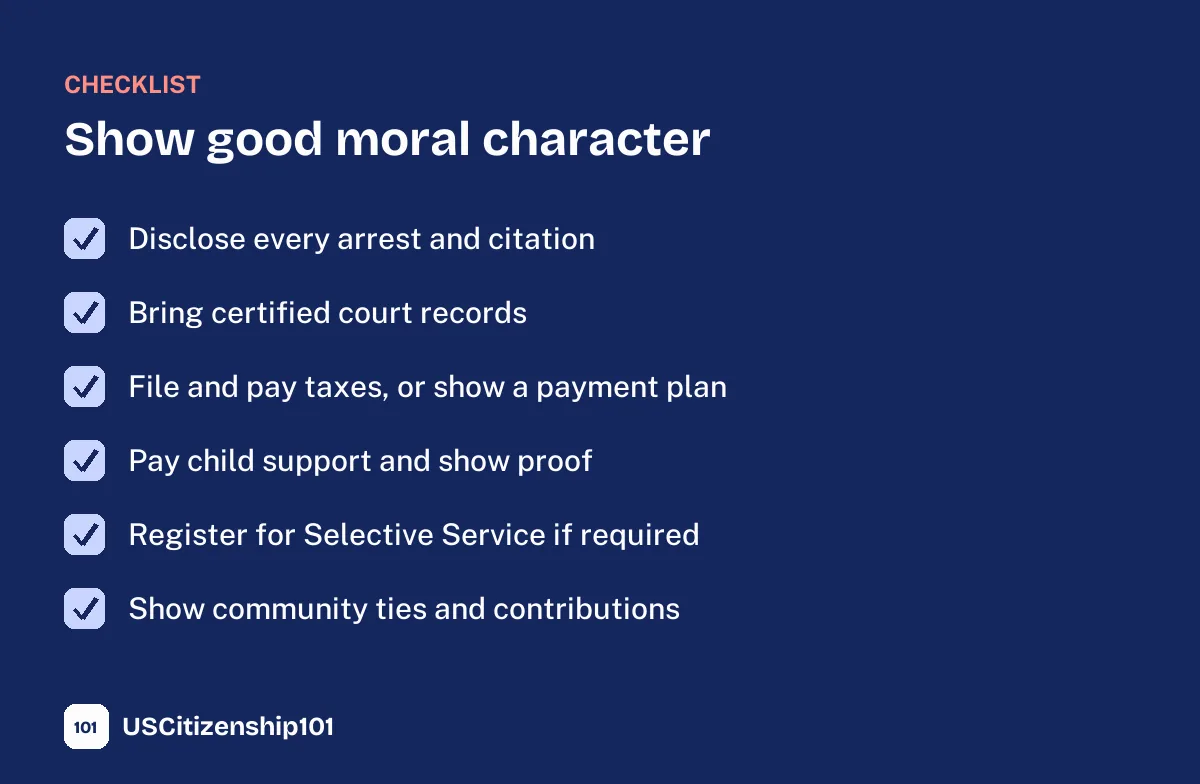
Failing to file required tax returns or to pay taxes you owe can be a problem. If you owe taxes, set up a payment plan with the IRS or state and bring proof that you are following it. Bring IRS tax transcripts for the statutory period.
Child support
Willfully failing to support your dependents, including court-ordered child support, can prevent good moral character. Bring proof of payments or of an arrangement to pay arrears.
Selective Service
Men who lived in the United States between ages 18 and 26 generally had to register with Selective Service. Knowingly and willfully failing to register during the statutory period can be a problem. If you did not register, get a status information letter from Selective Service and be ready to explain.
Other unlawful acts
Driving under the influence, domestic violence, probation violations, and other unlawful conduct during the statutory period can weigh against you, even if they are not automatic bars. So can a pattern of minor offenses, because the officer looks at your conduct as a whole rather than one incident at a time.
The holistic approach: positive factors count
USCIS guidance emphasizes that officers should evaluate good moral character as a whole. That means weighing any negative factors against positive ones, such as steady employment, education, family responsibilities, community involvement, volunteer work, and compliance with the law since any past issue. If you have a past problem, evidence of rehabilitation and contributions can matter.
Disclose everything
The single most important rule is honesty. See our guide on how to fill out Form N-400 for where these questions appear. You must disclose every arrest, citation, charge, and conviction on Form N-400, even if the case was dismissed, sealed, or expunged, and even if it happened outside the United States. Officers see fingerprint results. Hiding a record can be treated as false testimony, which can itself prevent good moral character.
Evidence to bring
- Certified court dispositions for every arrest, citation, or charge.
- Proof that you completed any sentence, probation, or program.
- IRS tax transcripts and any payment plan agreement.
- Proof of child support payments.
- A Selective Service registration record or status information letter.
- Letters from employers, community leaders, or organizations, if helpful.
Examples of how good moral character is weighed
These illustrations show how officers typically think about common situations. Real cases depend on the details, so treat them as general guidance.
A speeding ticket three years ago
Luis received a speeding ticket and paid it. He discloses it and brings the receipt. A single minor traffic ticket rarely affects good moral character.
A DUI arrest two years ago
Nadia was convicted of driving under the influence, completed probation and an alcohol program, and has had no issues since. A single DUI is not an automatic bar, but the officer will look closely at the facts, her rehabilitation, and whether there is a pattern. She brings court records, proof of completion, and letters from her employer.
Unpaid taxes
Samuel owed back taxes from a difficult year. Before filing, he set up an IRS installment agreement and has made every payment. He brings the agreement and payment history. This shows he is meeting his obligations.
No Selective Service registration
Omar did not register for Selective Service when he was 19 because he did not know about it. He is now 29, so the failure is outside the 5-year period, and he brings a status information letter explaining the situation. Many officers can find good moral character in cases like this, especially when the failure was not knowing and willful.
A hidden arrest
Ling left an old shoplifting arrest off her N-400 because the case was dismissed. Her fingerprints show the arrest. The officer is now concerned about honesty, which can be more serious than the arrest itself. Disclosing it with the dismissal record would have avoided the problem.
Questions the officer may ask
- Have you ever been arrested, cited, or detained, anywhere in the world?
- Have you filed your federal and state tax returns every year?
- Do you owe any overdue taxes?
- Do you have children who do not live with you, and do you support them?
- Did you register for Selective Service?
- Have you ever claimed to be a U.S. citizen or voted in an election?
- Have you ever given false information to obtain an immigration benefit?
Practice these and other citizenship interview questions before your interview.
Crimes committed abroad
Conduct outside the United States counts too, including anything that happened before you immigrated. Disclose arrests, charges, and convictions from any country, and bring court records with certified English translations. Offenses abroad are evaluated under U.S. immigration law, which may treat them differently from the country where they happened.
Evidence of rehabilitation and positive contributions
If you have a past issue, show the officer who you are today. Helpful evidence includes proof of completed sentences and programs, steady employment records, tax transcripts, proof of supporting your family, certificates from education or training, volunteer records, letters from employers, religious leaders, or community organizations, and a clean record since the incident. This kind of evidence supports a positive finding of good moral character under the holistic approach.

How to get your records
Showing good moral character often depends on having the right paperwork. Here is how to get it:
- Court dispositions: contact the clerk of the court where the case was handled and request a certified copy of the final disposition. Many courts offer online requests.
- Police reports: request them from the arresting agency if the court file does not explain what happened.
- FBI Identity History Summary: you can request your own FBI record, which lists arrests linked to your fingerprints. It helps you make sure you have not forgotten anything.
- IRS tax transcripts: download them free from the IRS website.
- Selective Service: check your registration online or request a status information letter.
- Foreign records: request certified records from the relevant country, with a certified English translation.
Good moral character on the marriage path
If you apply after 3 years of marriage to a U.S. citizen, the statutory period for good moral character is 3 years instead of 5. The same bars and factors apply. Officers may also look at whether you have supported your family and complied with any court orders related to your marriage or children. See citizenship through marriage.
How far back USCIS looks
The focus is the statutory period, but the officer can consider earlier conduct if it helps show your present character, and permanent bars apply no matter how long ago they occurred. The N-400 asks about arrests and certain conduct at any time in your life, so you must disclose everything the form asks about, even if you believe it is too old to matter.
Common misunderstandings
- “A dismissed case does not count.” You must still disclose it, with the dismissal record.
- “Expunged records disappear.” Not for immigration purposes; disclose them.
- “Only convictions matter.” Some conduct counts even without a conviction, such as admitted drug use or false claims to citizenship.
- “Good moral character only means no crimes.” Taxes, child support, honesty, and Selective Service matter too.
- “One mistake means I can never become a citizen.” Most issues are not permanent bars. Time, rehabilitation, and honesty often lead to approval.
Why good moral character matters
Citizenship is a lifelong status with full rights, including voting and protection from removal. Congress requires good moral character so that people who become citizens have shown respect for the law and their community during the years before they apply. For most applicants, the requirement is easy to meet: they work, pay taxes, support their families, and follow the law. The rules mainly matter for people with serious criminal history or dishonesty in immigration matters.
Preparing your good moral character file
Before your interview, put together a simple folder:
- A one-page timeline of any arrests or citations, with dates, places, charges, and outcomes.
- Certified court records for each item, in the same order.
- Tax transcripts for the statutory period, and any payment plan.
- Proof of child support payments, if applicable.
- Selective Service proof, if applicable.
- A few letters or certificates showing your contributions, if you have a past issue.
An organized file makes the interview smoother and shows the officer that you take the good moral character requirement seriously. It also helps you answer questions consistently with your application. Read more about the full list of citizenship requirements.
What happens if the officer finds a problem
If the officer believes you do not meet the good moral character requirement, several things can happen. The officer may continue your case and ask for more documents, such as a court record you did not bring. If the issue is a conditional bar within the statutory period, the officer may deny the application, and you can usually reapply once the conduct falls outside the period and you can show good conduct since then. You can also request a hearing on a denial with Form N-336 within 30 days. In rare cases involving serious crimes, USCIS may refer the case for removal proceedings, which is why legal advice before filing is so important for anyone with a criminal record.
When to talk to a lawyer first
Consult a licensed immigration attorney or DOJ-accredited representative before filing if you have:
- Any criminal conviction, anywhere.
- Any arrest involving drugs, violence, theft, fraud, or weapons.
- Time in jail or prison.
- Any past false claim to citizenship or unlawful voting.
- Any past immigration fraud concern.
Some criminal issues can make you removable, not just ineligible for citizenship, and filing an N-400 brings your whole history under review.
Keep it clean until the oath
The good moral character requirement continues after you file, all the way to the oath ceremony. Any arrest or citation during that time must be reported on Form N-445 before the oath and can delay or stop your case. Drive carefully, keep up with taxes and support payments, and avoid situations that could lead to legal trouble.
Frequently asked questions
Does a traffic ticket affect good moral character?
Minor traffic tickets usually do not, but you must still disclose any citation the form asks about. Tickets involving alcohol or drugs, or large fines, are more serious. Bring proof that you paid every ticket, even small ones.
Does a misdemeanor prevent good moral character?
Not automatically. It depends on the type of offense, when it happened, the sentence, and your conduct since. Many people with a single minor misdemeanor are approved.
Can a lawyer attend the interview with me?
Yes. An attorney or accredited representative who has filed Form G-28 may attend and help clarify issues about your record.
What if my record was expunged?
Disclose it anyway. Expungement under state law generally does not erase it for immigration purposes.
Does good moral character include my social media?
USCIS can review publicly available information as part of its checks. Keep in mind that anything you post publicly could be seen, and never post anything untrue about your immigration history.
Is owing a small amount of tax a problem?
Owing taxes is less of a problem if you have a payment plan and are following it. Bring proof.
Can I wait until the statutory period passes?
For conditional bars, waiting until the event is outside the statutory period can help, though USCIS may still consider it. For permanent bars, waiting does not help.
Final thoughts
Good moral character is about who you are today and how you have lived during the years before you apply. Be completely honest, disclose every record with certified documents, meet your tax and family obligations, and show your positive contributions. If you have any criminal history, talk to an immigration attorney before you file.
Sources: USCIS Policy Manual, Volume 12, Part F (Good Moral Character); INA section 101(f). Last reviewed September 2026. General information, not legal advice.
Free tools
This article is for general education, not legal advice. Always confirm requirements at uscis.gov.