The Citizenship English Test: Reading, Writing, and Speaking Explained
How the speaking, reading and writing parts work, what the officer is looking for, who is exempt, and a simple way to practice every day.
On this page
The citizenship English test checks that you can speak, read, and write basic English. It is one of the two tests at your naturalization interview, along with the civics test. The good news is that the citizenship English test is short and predictable: you read one sentence, write one sentence, and have a conversation with the officer about your application.
This guide explains each part of the citizenship English test in detail, shows what counts as a pass, explains who is exempt, and gives you a simple daily practice plan.
Key points about the citizenship English test
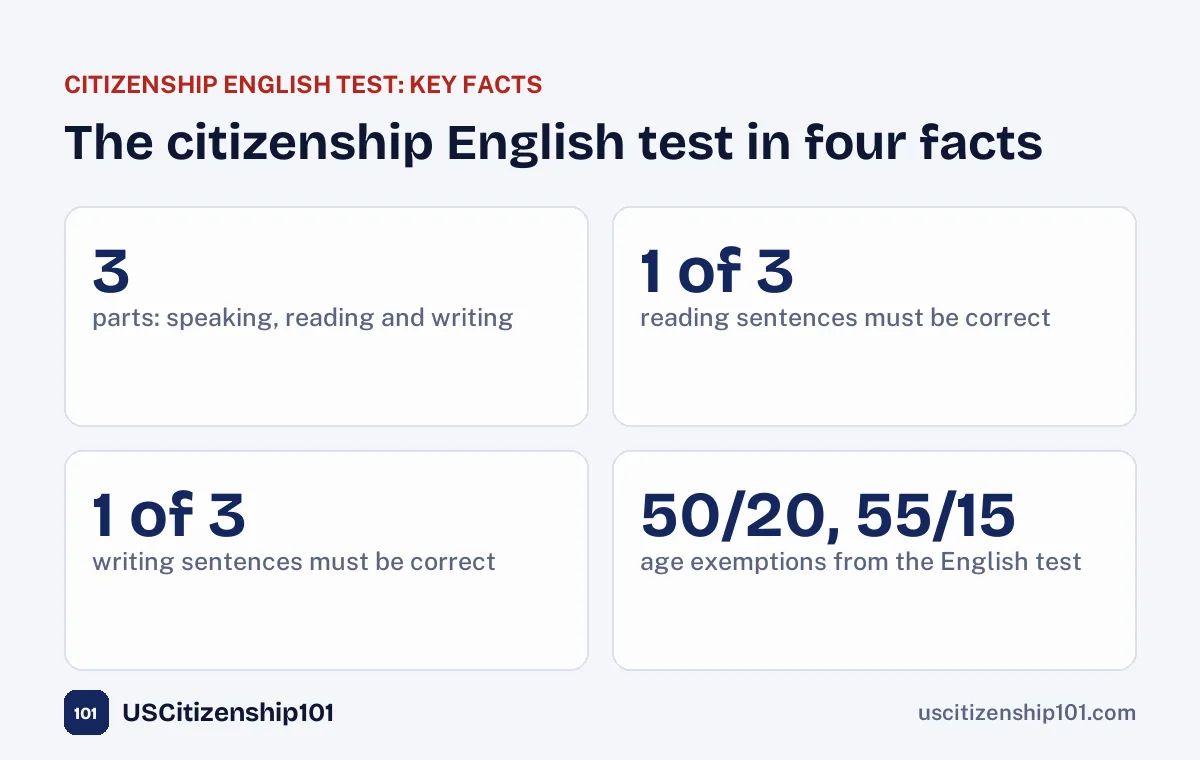
- The citizenship English test has three parts: speaking, reading, and writing.
- Speaking is judged during the whole interview; there is no separate speaking exam.
- Reading: read 1 of up to 3 sentences correctly out loud.
- Writing: write 1 of up to 3 sentences correctly from dictation.
- Some older applicants are exempt from the English test.
Part 1: Speaking
From the moment you greet the officer, your spoken English is being assessed. The officer places you under oath, asks questions about your Form N-400, and listens to your answers. If you can understand and answer these questions, you pass the speaking part of the citizenship English test.
What the officer is looking for
- You understand the questions, sometimes after a repeat or rephrasing.
- You answer in a way the officer can understand.
- You can communicate about your own life: address, work, family, travel.
Perfect grammar and a native accent are not required. Short, clear answers are ideal. It is always acceptable to say “Could you please repeat the question?” or “Could you say it another way?”
How to practice speaking
Practice answering the questions from your own N-400 out loud. Our guide to citizenship interview questions lists more than 50, and our mock interview reads them aloud so you can answer.
Part 2: Reading
The officer shows you a sentence, often on a tablet, and asks you to read it out loud. The sentence is usually a short question, such as “Who was the first President?” You get up to three sentences and need to read one correctly.
What counts as correct
- You read the sentence without leaving out or replacing important words.
- Your pronunciation is clear enough that the meaning is understood.
- You read without very long pauses.
Small pronunciation differences or an accent do not cause failure. Skipping an important word or making long pauses can.
How to practice reading
Every sentence uses words from the official reading vocabulary list. Learn every word on the USCIS vocabulary list and read practice questions aloud every day.

Part 3: Writing
The officer reads a sentence out loud and you write it, usually on a tablet or signature pad. The sentence is usually a short statement, such as “Washington was the first President.” You get up to three sentences and need to write one correctly.
What counts as correct
- The sentence communicates the meaning of the dictated sentence.
- Important words are not missing or changed.
- The writing can be read.
Small spelling, capitalization, or punctuation mistakes may be accepted if they do not change the meaning. Numbers may be written as words or digits. Abbreviations of words that should be written in full, missing words, or unreadable writing usually cause a fail.
How to practice writing
Have someone read practice sentences to you, or use our English practice page, which plays sentences aloud and checks what you type word by word. Also practice by hand, because the real test is handwritten.
Reading and writing sentences are connected
On the citizenship English test, reading sentences are usually questions and writing sentences are usually answers. For example, you might read “When is Labor Day?” and write “Labor Day is in September.” Practicing matching pairs is the fastest way to prepare for both parts.
Who is exempt from the citizenship English test?
- 50/20: age 50 or older, with 20 years as a permanent resident when you file.
- 55/15: age 55 or older, with 15 years as a permanent resident.
- 65/20: age 65 or older, with 20 years as a permanent resident. You also study only 20 civics questions.
- Medical exception: a qualifying disability certified on Form N-648.
Exempt applicants still take the civics test, in their own language with an interpreter. See citizenship test exemptions.
A simple daily practice plan
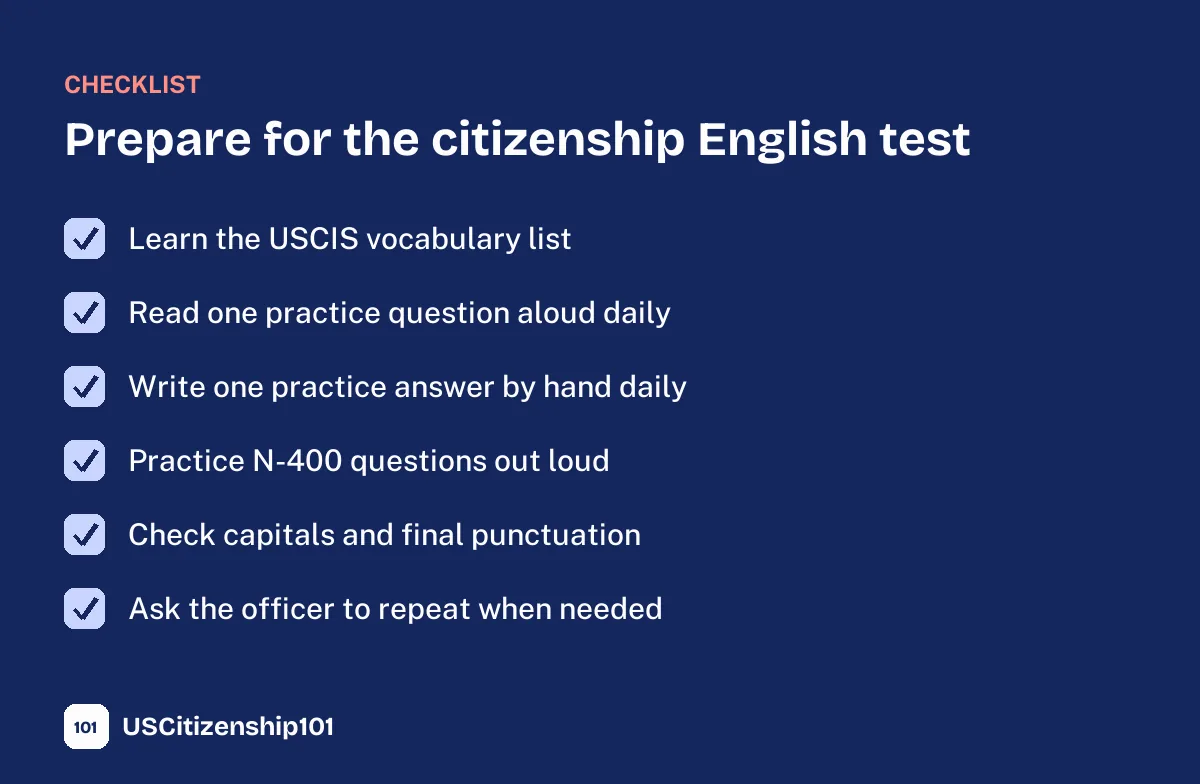
- Read three practice questions out loud (3 minutes).
- Write three practice answers by hand from dictation (5 minutes).
- Check capitals, missing words, and final punctuation (2 minutes).
- Answer five N-400 questions out loud in full sentences (5 minutes).
Fifteen minutes a day for three weeks is enough for most applicants to feel confident on the citizenship English test. Keep a small notebook of words you misspell, and review it before each session until every word is correct.
20 practice pairs for the citizenship English test
Read the question aloud, then write the answer from dictation. All words come from the official vocabulary lists.
| Read | Write |
|---|---|
| Who was the first President? | Washington was the first President. |
| What is the capital of the United States? | Washington, D.C. is the capital of the United States. |
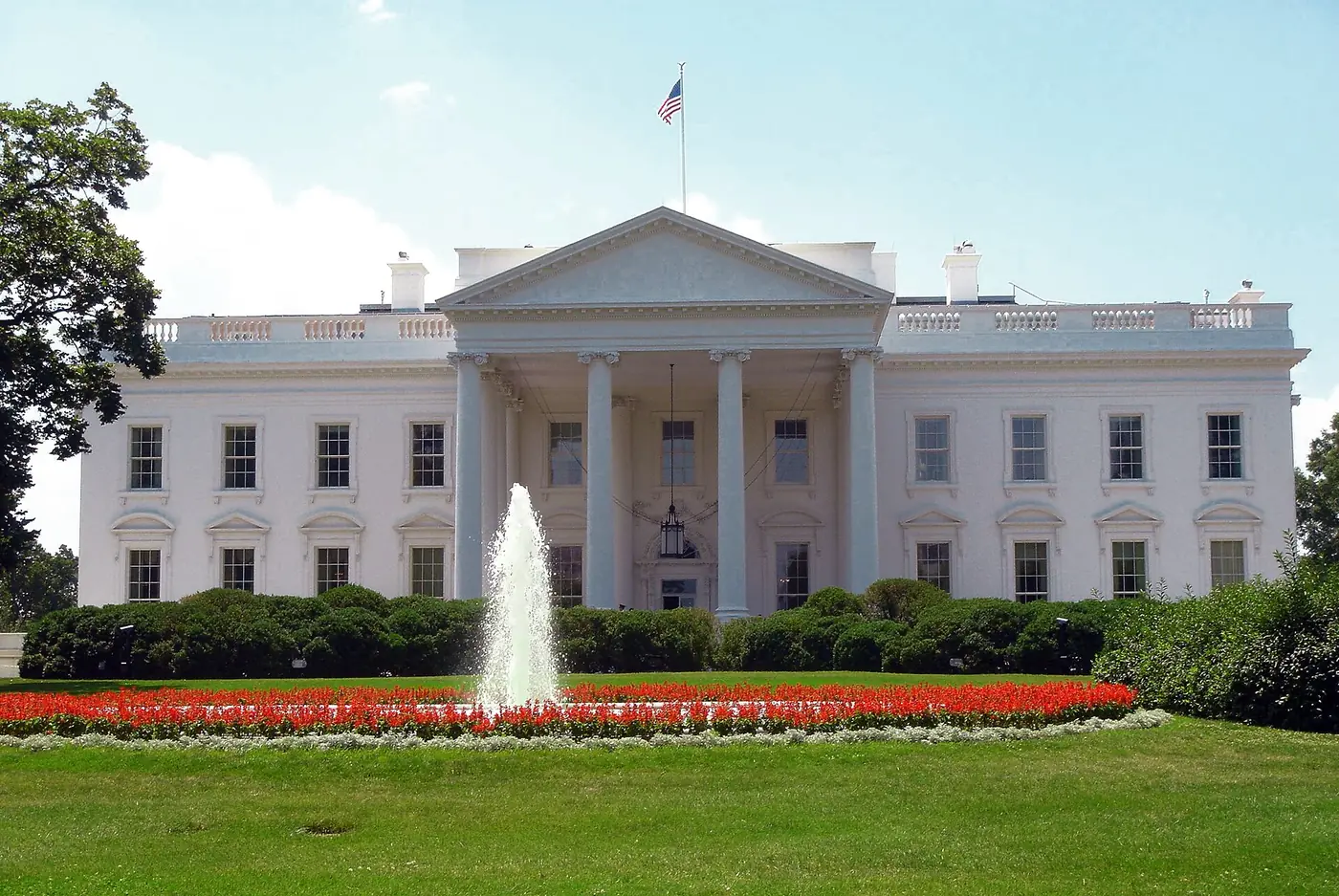
| Who lives in the White House? | The President lives in the White House. |
| Where is the White House? | The White House is in Washington, D.C. |
| What country is north of the United States? | Canada is north of the United States. |
| What country is south of the United States? | Mexico is south of the United States. |
| When is Independence Day? | Independence Day is in July. |
| When is Labor Day? | Labor Day is in September. |
| When is Thanksgiving? | Thanksgiving is in November. |
| When is Memorial Day? | Memorial Day is in May. |
| When is Flag Day? | Flag Day is in June. |
| What is the largest state? | Alaska is the largest state. |
| Who can vote? | Citizens can vote. |
| What are the colors of the American flag? | The flag is red, white, and blue. |
| How many Senators does Congress have? | Congress has one hundred Senators. |
| Who is the Father of Our Country? | Washington is the Father of Our Country. |
| Why do people come to America? | People come to America to be free. |
| What do we pay to the government? | We pay taxes. |
| Who was Lincoln? | Lincoln was President during the Civil War. |
| Where does Congress meet? | Congress meets in Washington, D.C. |
A sample speaking conversation
This short exchange shows the level of English the speaking part of the citizenship English test expects:
- Officer: How long have you lived at your current address?
- You: About three years, since 2023.
- Officer: Where do you work?
- You: I work at a hospital. I am a nurse assistant.
- Officer: Have you traveled outside the United States since you became a resident?
- You: Yes, two times, to visit my family in Peru.
- Officer: Have you ever claimed to be a U.S. citizen?
- You: Sorry, could you repeat that?
- Officer: Have you ever said you were a U.S. citizen?
- You: No, never.
Notice that asking for a repeat is perfectly fine and did not hurt the result.
Pronunciation tips
- Read at a steady pace. Clarity matters more than speed.
- Stress the first syllable in words like PRES-i-dent, CON-gress, and SEN-a-tors.
- Pronounce the final “s” in plurals like “states” and “citizens.”
- Read “U.S.” as “you ess” and “D.C.” as “dee see.”
- Practice “th” in “the,” “Thanksgiving,” and “north.”
Handwriting and the signature pad
Many field offices use an electronic signature pad for the writing part of the citizenship English test. Writing with a stylus on a small screen feels different from paper, so practice writing slightly larger and slower than usual. Keep letters separate and clear. If your writing goes off the screen or becomes messy, tell the officer; they can usually clear it and let you start again.
Common mistakes on the citizenship English test
- Missing small words: leaving out “the,” “in,” or “of” can change the meaning.
- No capital letters: names, places, months, and holidays need capitals, and so does the first word.
- Abbreviations: write “Senators,” not “Sen.”; write “Washington,” not “Wash.”
- Rushing the reading: reading too fast leads to skipped words.
- Not asking for a repeat: if you did not hear the dictated sentence, ask.
- Spelling tricky words: practice “February,” “Delaware,” “Thanksgiving,” and “Senators.”
Free help for the citizenship English test
- USCIS study materials: free reading and writing vocabulary lists, flashcards, and audio on uscis.gov.
- Public libraries: many offer free citizenship and English classes, conversation groups, and study guides.
- Adult education centers: community colleges and school districts often run free English as a Second Language classes.
- Nonprofits: immigrant service organizations frequently run citizenship preparation classes.
- This website: our English practice page lets you listen, type, and check sentences for free.
A three-week plan
- Week 1: learn the reading vocabulary list and read five practice questions aloud each day.
- Week 2: learn the writing vocabulary list and write five practice answers by hand each day.
- Week 3: full practice: read three questions, write three dictated answers, and answer ten N-400 questions out loud each day.
Combine this with your civics study, because many civics answers use the same words that appear on the citizenship English test.
The citizenship English test on the day, step by step
- Greeting and oath: the speaking assessment begins. Answer simply and politely.
- N-400 review: the officer asks about your application. This is the main speaking part.
- Reading: the officer shows you a sentence. Read it aloud. If you miss it, you get another, up to three.
- Writing: the officer reads a sentence. Write it. Again, you have up to three chances.
- Civics: the officer asks civics questions, which also shows your listening and speaking.
Some officers do reading and writing before the application review, and some after. The order does not change what you need to do.
How the officer decides about speaking
There is no score sheet for speaking. The officer decides whether you can understand and respond to questions about your application. If the officer has trouble understanding you, they may rephrase questions, speak more slowly, or ask follow-ups. If communication is still not possible, the officer may decide you did not pass the speaking part, and you will be offered a retest. This is rare for applicants who practice their N-400 answers out loud.
15 speaking practice questions
- What is your name?
- Where do you live?
- How long have you lived there?
- Who do you live with?
- Where do you work, and what do you do?
- Are you married? How many children do you have?
- When did you become a permanent resident?
- Have you traveled outside the United States? Where did you go?
- Why do you want to become a U.S. citizen?
- Have you ever been arrested or received a ticket?
- Do you owe any taxes?
- Have you ever voted in an election in the United States?
- Do you support the Constitution?
- Are you willing to take the Oath of Allegiance?
- What does “oath” mean?
Answer each one out loud in a full sentence. If you can do this comfortably, you are ready for the speaking part of the citizenship English test.
If you had little schooling
Many applicants learned English as adults and had little formal education. The citizenship English test was designed with you in mind: the words are simple and the sentences are short. Start with the vocabulary words, copy sentences by hand before trying dictation, and practice every day for a short time. Libraries and adult education programs offer free help, and patient practice with a family member works well too.
How the citizenship English test connects to civics
Many words on the reading and writing lists also appear in civics answers: President, Congress, Senators, the White House, the Civil War, Independence Day, and George Washington. That means every hour you spend on civics also prepares you for the citizenship English test. A good approach is to study a civics topic, then read and write two related sentences. For example, after learning about Congress, read “How many Senators does Congress have?” and write “Congress has one hundred Senators.”
Myths about the citizenship English test
- “I need to write long paragraphs.” No. You write one short sentence at a time.
- “My accent will make me fail.” No. Officers understand many accents. Clarity matters, not accent.
- “One spelling mistake means failure.” Not always. Small errors that do not change the meaning may be accepted.
- “If I fail reading, I fail everything.” No. You get up to three sentences, and a retest if needed, and your other results still count.
- “Older people cannot be exempt.” Many can. Check the 50/20, 55/15, and 65/20 rules.
Knowing the truth about the citizenship English test removes a lot of unnecessary worry, so you can put your energy into steady daily practice.
What if you do not pass?
If you do not pass reading or writing, you get a second chance 60 to 90 days later, and you only retake the part you missed. See what happens if you fail the citizenship test.
Frequently asked questions
Do I need perfect English?
No. The citizenship English test checks basic English. Clear communication matters more than perfect grammar.
Will the officer repeat a sentence for dictation?
Officers usually read the sentence clearly and may repeat it. If you did not hear it, politely ask.
How long does the citizenship English test take?
The reading and writing parts take only a few minutes. The speaking part happens throughout the 20 to 30 minute interview.
What if I cannot read the first sentence?
Stay calm. The officer will give you another sentence, up to three in total. You only need to read one correctly.
Can I practice with my children?
Yes. Children who learn English at school are often excellent practice partners for reading and dictation, and practicing together makes it fun.
Do officers give extra time for the writing part?
There is no strict time limit, but write at a steady pace. If you need a moment, that is fine.
Can I use a dictionary?
No. You cannot use a dictionary or notes during the test.
Is the citizenship English test the same for the 2025 and 2008 civics versions?
Yes. The English test format is the same regardless of your civics version.
Your citizenship English test checklist
- I know every word on the reading and writing vocabulary lists.
- I can read practice questions aloud without long pauses.
- I can write practice answers with capitals and a final period.
- I can answer my N-400 questions out loud in simple sentences.
- I know how to ask the officer to repeat a question.
If you can check every box, you are ready for the citizenship English test.
Final thoughts
The citizenship English test is one of the most predictable parts of naturalization. Learn the vocabulary words, practice reading questions aloud and writing answers by hand, and rehearse your N-400 answers. With a few weeks of steady practice, the English test will feel easy.
Sources: USCIS, Study for the Test; USCIS reading and writing vocabulary lists. Last reviewed September 2026.
Free tools
This article is for general education, not legal advice. Always confirm requirements at uscis.gov.